The Way Of A True Prophet Of God
William Branham · May 13, 1962 · Branham Tabernacle, Jeffersonville, Indiana
♫ Listen to or read the full sermon at Voice Of God Recordings →
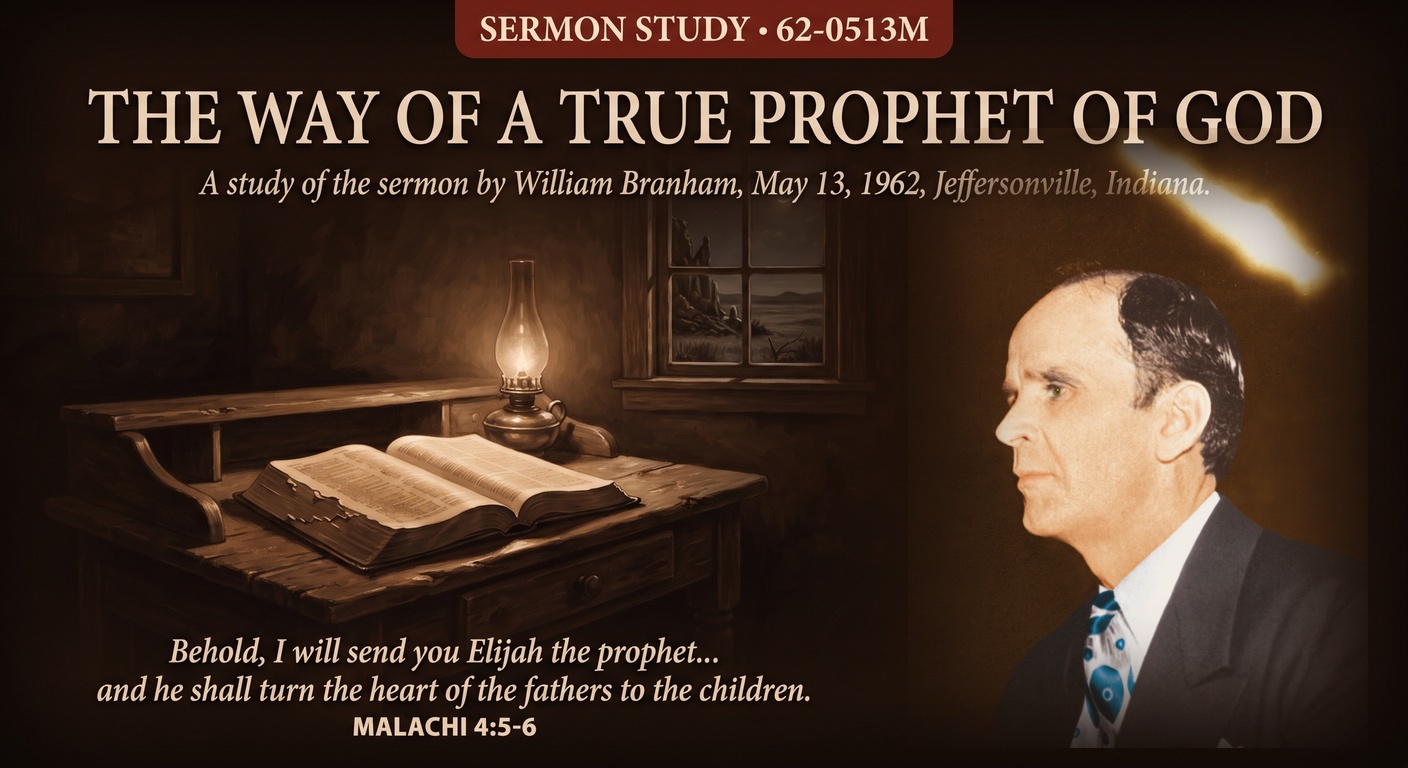
Before Brother Branham even reaches his subject, a man in the congregation stands and offers a testimony: an Easter Sunday discernment where a stranger was called out and told, through the Spirit, "they call you Bill," when his actual name was Isaac. It checked out exactly as spoken. Brother Branham's response is simple: "The Holy Spirit makes no mistakes." That small exchange, tucked in before the sermon proper begins, is not incidental. It sets the entire question the message goes on to answer directly: what actually marks a true prophet, as opposed to someone merely claiming to be one.
What a False Prophet Sounds Like
Brother Branham doesn't waste time being diplomatic about it. He directly rebukes what he calls backslidden, so-called prophets, men who don't know the Word because they haven't studied it, who spend their warnings on the wrong target entirely. He names the specific example: people were consumed with fear over communism taking over the world, while missing that the real danger was Romanism advancing under the name of Christianity itself. A man can carry the title of prophet and still be watching the wrong horizon, because he never did the work of actually knowing the Word he claims to speak for.
The Word Has To Come To The Man
This is the test Brother Branham keeps returning to, and it's a narrower one than most people expect. It isn't about confidence, personality, or the willingness to make bold claims. A true prophet is a man the Word of God actually comes to, and it's vindicated when it happens, meaning it lines up with scripture and it proves true. Anyone can claim a title. What can't be manufactured is the Word of God coming to a man and being shown, afterward, to have been exactly right.
What We Need Today
The sermon builds to its own conclusion, and Brother Branham states it plainly: "What we need today is another true prophet." He grounds it in Malachi 4, the promise of an Elijah to come who would turn the hearts of the people back to the fathers, restoring their faith to the Bible itself rather than to denominational tradition. And he doesn't promise this man an easy reception. He says outright that such a man would be rejected, run out, cast out, and that his real work would be sowing seed that the elected would eventually find, whether or not the wider crowd around him ever did.
Why This Matters Beyond One Sermon
Strip away the specific year and the specific pulpit, and the question Brother Branham is asking still stands in front of every generation: how do you actually recognize the real thing when it shows up, especially knowing in advance that it will be rejected by most of the very people it's sent to? The temptation is always to trust the man who sounds most confident, or draws the biggest crowd, or names the loudest enemy. Brother Branham's answer cuts against every one of those instincts. The mark isn't volume. It's whether the Word came to him, and whether it proved true.
For Further Study
- Read Malachi 4:5–6 in its own context. What specifically is the promised messenger sent to do, and to whom?
- Compare this sermon's warning about "backslidden so-called prophets" with 1 John 4:1. What test does John give for discerning a true spirit from a false one, and how does it match or differ from the test Brother Branham describes?
- Brother Branham says a true prophet in this hour would be rejected by the majority. Sit with that claim honestly. What would it look like, practically, to be one of the elected who finds the seed rather than one who rejects it?
Source: The Way Of A True Prophet Of God, preached May 13, 1962. Text © Voice Of God Recordings. This study reflects my own understanding of the message as a believer, not a verbatim reproduction of the sermon.
← Back to Sermon Studies