Why the Bible's Manuscript Evidence Still Holds Up
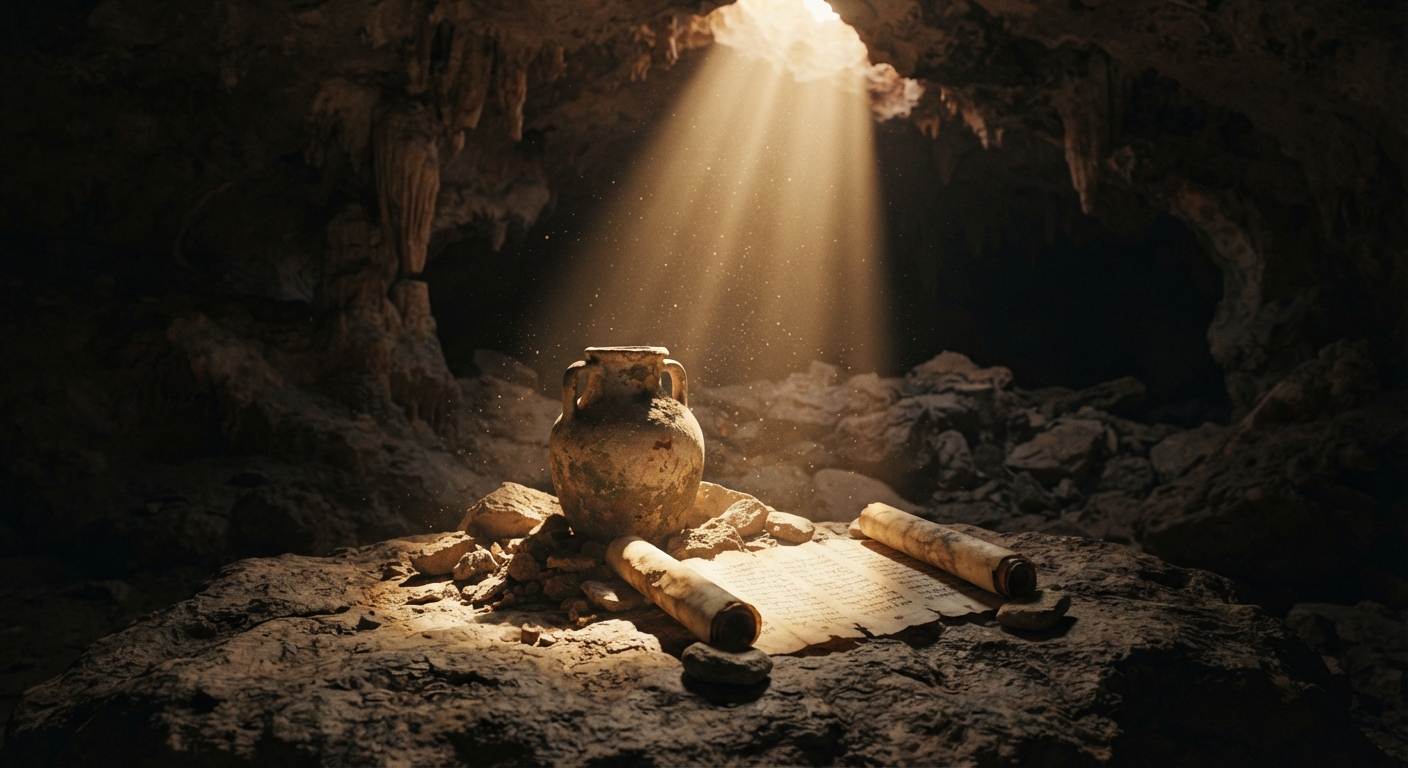
Ask most people why they believe the New Testament we read today resembles what was originally written, and you'll usually get a shrug. It's an old book. Copied by hand, for centuries, long before printing presses or spell-check. Surely something got lost along the way.
It's a fair question. It's also one that's been asked and tested more rigorously than almost any other ancient document in history, and the answer turns out to be more solid than most people, believers and skeptics alike, tend to assume.
The Bibliographical Test
Historians who study ancient texts use a simple, unglamorous method to judge how confident we can be in a document's transmission: count the surviving manuscripts, and measure the gap between the earliest copy and the original composition. More copies, and a shorter gap, means more opportunities to cross-check one copy against another and catch errors. Fewer copies, and a longer gap, means we're trusting a thinner thread.
By this standard, the New Testament isn't just well-attested for an ancient religious text. It's in a category of its own compared to nearly every other document from the ancient world that historians confidently rely on every day.
Consider Homer's Iliad, arguably the best-attested secular work from antiquity outside of scripture. It survives in roughly 1,900 manuscripts, with the earliest copies dating several centuries after Homer likely composed it. Julius Caesar's Gallic Wars survives in fewer than a dozen manuscripts, the earliest copied nearly a thousand years after Caesar wrote it. No historian seriously doubts we have a reliable picture of either text, and yet the New Testament dwarfs both by comparison.
What We Actually Have
Today, more than 5,800 Greek manuscripts of the New Testament survive, in whole or in part, alongside tens of thousands more in Latin, Coptic, Syriac, and other early translations. Some of these fragments are staggeringly early. A scrap of the Gospel of John known as Rylands Library Papyrus P52 has been dated to the first half of the second century, likely within a few decades of when John's Gospel was originally composed, and found not in Israel but in Egypt, showing how quickly the text had already spread.
That's not a thousand-year gap. That's a lifetime.
And when scholars compare these thousands of manuscripts against one another, the picture that emerges isn't one of chaos or wholesale rewriting. The vast majority of textual differences are exactly what you'd expect from centuries of hand-copying: spelling variations, word order, the kind of things that don't touch a single doctrine or historical claim. The handful of genuinely meaningful variants are almost always identified, footnoted, and discussed openly in modern translations, not hidden.
The Old Testament's Own Surprise
The New Testament isn't the only place this evidence shows up. For centuries, the oldest complete Hebrew manuscripts of the Old Testament dated to around the 10th century AD, leaving a gap of well over a thousand years between the original composition of books like Isaiah and our earliest complete copies.
Then, in 1947, the Dead Sea Scrolls were discovered near Qumran, including a complete scroll of Isaiah dated to roughly a century before Christ. When scholars set that thousand-year-older scroll side by side with the medieval Hebrew text, the two matched with remarkable consistency, differing mostly in spelling and minor grammatical details. A tradition many assumed had drifted over a millennium of copying turned out to have been preserved with startling care.
Why This Actually Matters
None of this proves the Bible's claims are true in the theological sense, that's a different question, and one worth taking seriously on its own terms. What this evidence does establish is narrower, but foundational: that what we're reading today is, with very high confidence, what was actually written by the original authors. The manuscript record doesn't leave us guessing. It leaves a paper trail, or rather, a papyrus and parchment one, that historians can and do follow.
For a faith that has always insisted on being rooted in real events and real testimony rather than private mysticism, that's not a small thing. It's the ground the rest of the conversation gets to stand on.

This post draws directly on the case made in full in 777 Reasons the Bible Can Be Trusted.
Learn More Buy Now