Writing the Woman Who Never Speaks: Lot's Wife in Salt
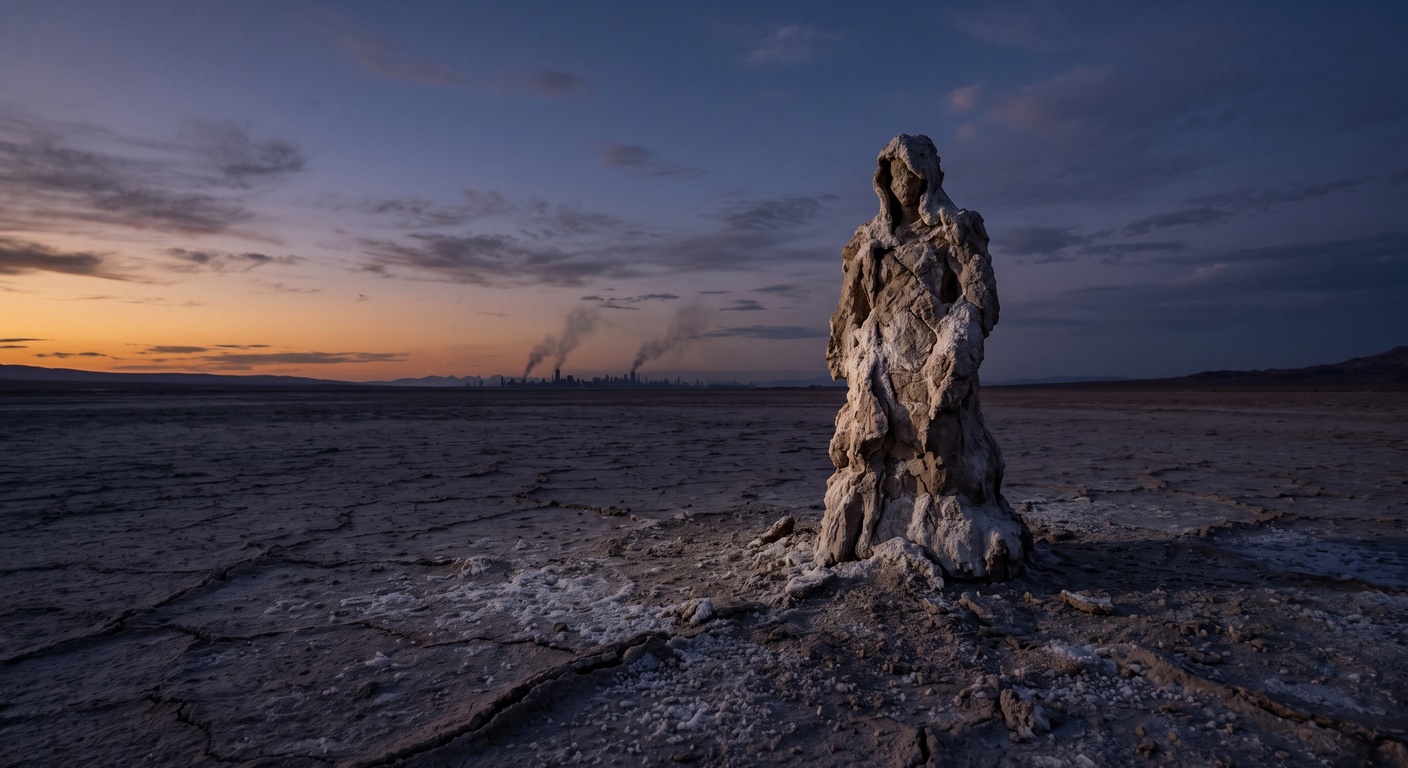
Here is the entire biblical record of the woman married to Lot: she flees Sodom with her husband and two daughters, is told not to look back, looks back anyway, and becomes a pillar of salt. Genesis doesn't even give her a name, only a relationship and a warning. So when I sat down to write Salt, the real problem wasn't finding a plot. It was deciding how a woman with no recorded voice gets to tell her own story without me putting words in scripture's mouth.
Giving Her a Name I'd Never Let You Hear
The novel is narrated in her own voice, in first person, a woman looking back on her life from the far side of judgment. That required a name; nobody narrates their own girlhood by relationship title. So she has one. Partway through the book, a woman she meets at a well asks for it, and the line reads simply: "I told her my name." You never learn what it is. I know what it is. Every person in her world knows what it is. But the reader doesn't get it, because Genesis didn't give it, and inventing one and stamping it onto the historical record felt like a line I didn't have the right to cross. She gets a full interior life, girlhood, a hard father, a marriage, a city she came to love, without me ever handing the text a fact it doesn't contain.
A Frame Nobody Is Told They're Standing In
The book opens with a scene that has nothing to do with Lot at all: a woman gleaning barley at the edge of a harvested field while a man watches from a distance, "not searching, not weighing, already decided." Neither of them is named. If that scene sounds familiar, it should, it's Ruth, in Boaz's field, though the word "Ruth" never appears anywhere in the book. The dying narrator of Salt is speaking across centuries to a descendant she'll never meet: the daughter of a daughter of a daughter, born from the line that came out of the cave above Zoar, carried forward into a harvest field she'll never see. Genesis buries this connection in a single genealogical clause about Moab. The novel spends 200 pages inside it.
Why the Judgment Isn't the Last Word
The line that ended up carrying the whole book was one I didn't plan on until I was most of the way through it: "Mercy grows in places salted by judgment." That's the actual shape of her story in scripture, whether or not a reader ever traces the genealogy far enough to see it, the woman who became a warning is, a few generations later, the reason a Moabite widow named Ruth exists at all, which is the reason David exists, which is the reason the line runs all the way to Christ. Christ's own comment on her, three words in Luke 17:32, "Remember Lot's wife", has always read to me as a warning. It is one. But it's spoken by the same lineage her disobedience helped produce, which means the warning and the mercy were never actually in competition. Salt exists to sit inside that tension without resolving it too neatly.
