Daniel in Babylon: Faith Without a Single Miracle for Years
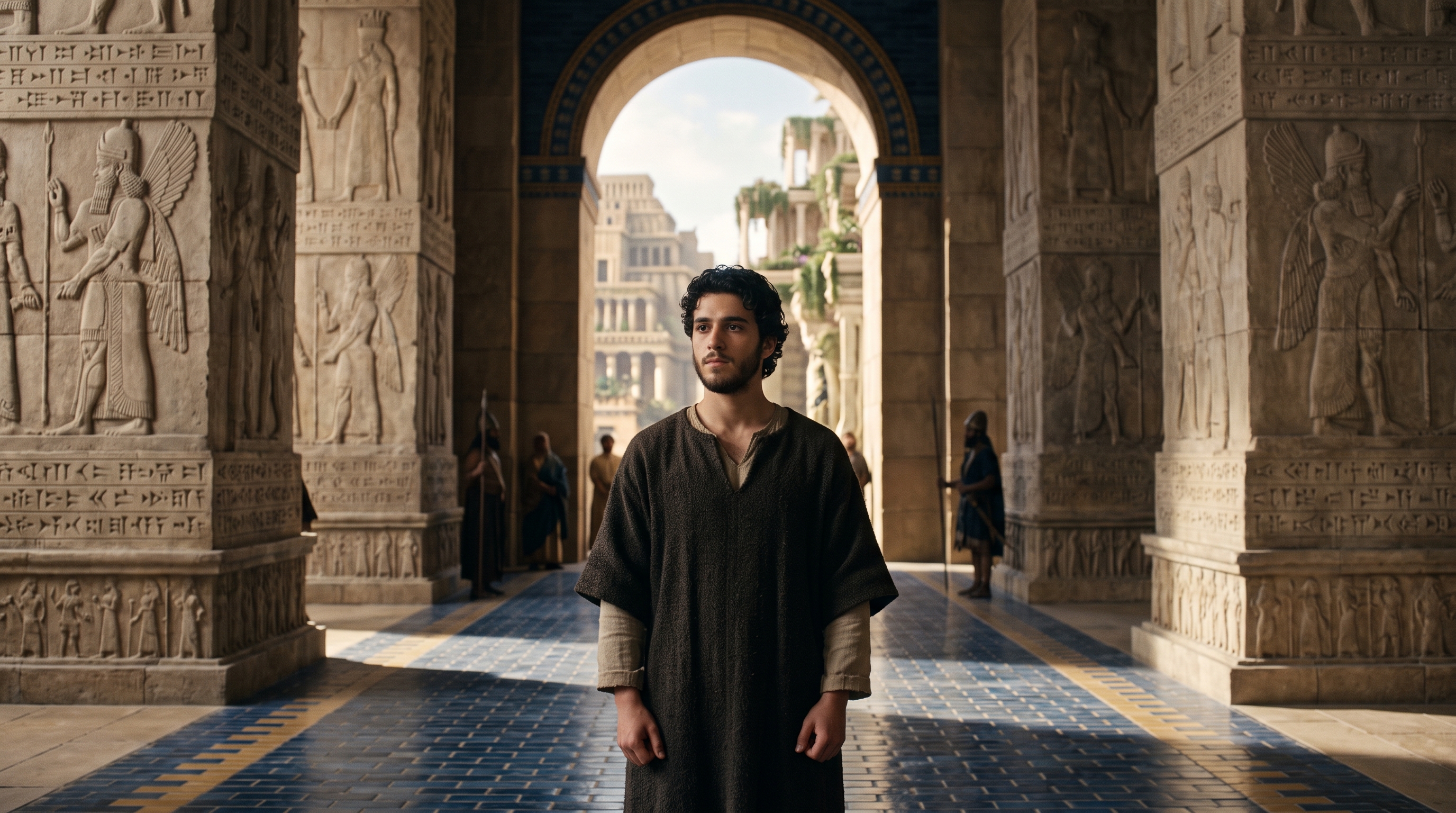
Everyone knows Daniel from the lions' den. Fewer people stop to notice how late in his life that story actually happens. By the time lions enter the picture, Daniel is an old man who has already served under multiple kings, through the fall of an empire, for the better part of seventy years. The den is the payoff of a faith that had already been tested and held for decades, with nothing nearly so dramatic to show for it in the meantime.
Taken, Renamed, Reassigned
Daniel 1 opens with Nebuchadnezzar's army carrying off the best of Jerusalem's young nobility to Babylon, Daniel among them, likely still a teenager. The first thing the empire does to him isn't cruel in any obvious way; it's thorough. New language, new education, new position, and a new name. Daniel, "God is my judge," becomes Belteshazzar, a name built around a Babylonian god instead. It's a quiet, bureaucratic kind of erasure, and it's aimed at exactly the right target: not his body, but his identity.
Most of what the empire demands, Daniel simply accepts. He doesn't fight the education, the language, or even the new name that scholars have used for him ever since. The assimilation campaign is thorough, and he lets most of it happen. Which makes the one place he draws a line all the more worth noticing.
The Line He Actually Drew
Daniel 1:8 says he "purposed in his heart that he would not defile himself with the portion of the king's meat, nor with the wine which he drank." Not the language. Not the name. Not the years of Babylonian education. Just the food and the wine, almost certainly meat that had been offered to Babylonian gods first, making the king's table a small, daily act of worship Daniel wasn't willing to participate in, however minor it might have looked from the outside.
That's a strange line to draw, if you're picking your battles for maximum effect. He let go of nearly everything that made him visibly Jewish and held the line on something almost nobody in the room would have thought twice about. But that's often exactly how real conviction works: not a dramatic stand on the biggest, most visible issue, but a specific, personal line drawn somewhere that looks small to everyone except the person drawing it.
Ten Days, Not Ten Years
The test he proposes to the guard in charge of him is almost comically modest: ten days of vegetables and water, then compare him to the young men eating from the king's table. No miracle is promised, no angel is mentioned, no vision justifies the request. It's just a bet that this particular obedience won't cost him what everyone assumes it will. Ten days later, Daniel and his three friends look healthier than the young men who ate the king's food, and the text moves on almost without comment, not with fireworks, but with a foreign official quietly deciding to keep doing it their way going forward.
The Part Before the Miracle
Here's what's easy to miss reading straight through to the more famous chapters: Daniel doesn't get any dramatic divine rescue for a very long time after this. He rises through the ranks of a pagan empire the ordinary way, through competence, integrity, and the kind of daily faithfulness nobody writes commemorative stories about while it's happening. The fiery furnace and the lions' den, when they finally come, arrive after decades of a much quieter test: whether a man taken from everything he knew as a teenager would still be recognizably faithful to God as an old man, with no burning bush required to keep him that way.
That's the Daniel I wanted to write, not the man in the den, but the boy who made one small decision about food on his first year in a foreign court, and then just kept making it, one ordinary day at a time, for the rest of his life.

This post draws directly on the full story told in Daniel: The Man in Babylon, Book Two of the Believers Series.
Learn More Buy Now