The Church Ages: Why Seven, Why These Seven Messengers
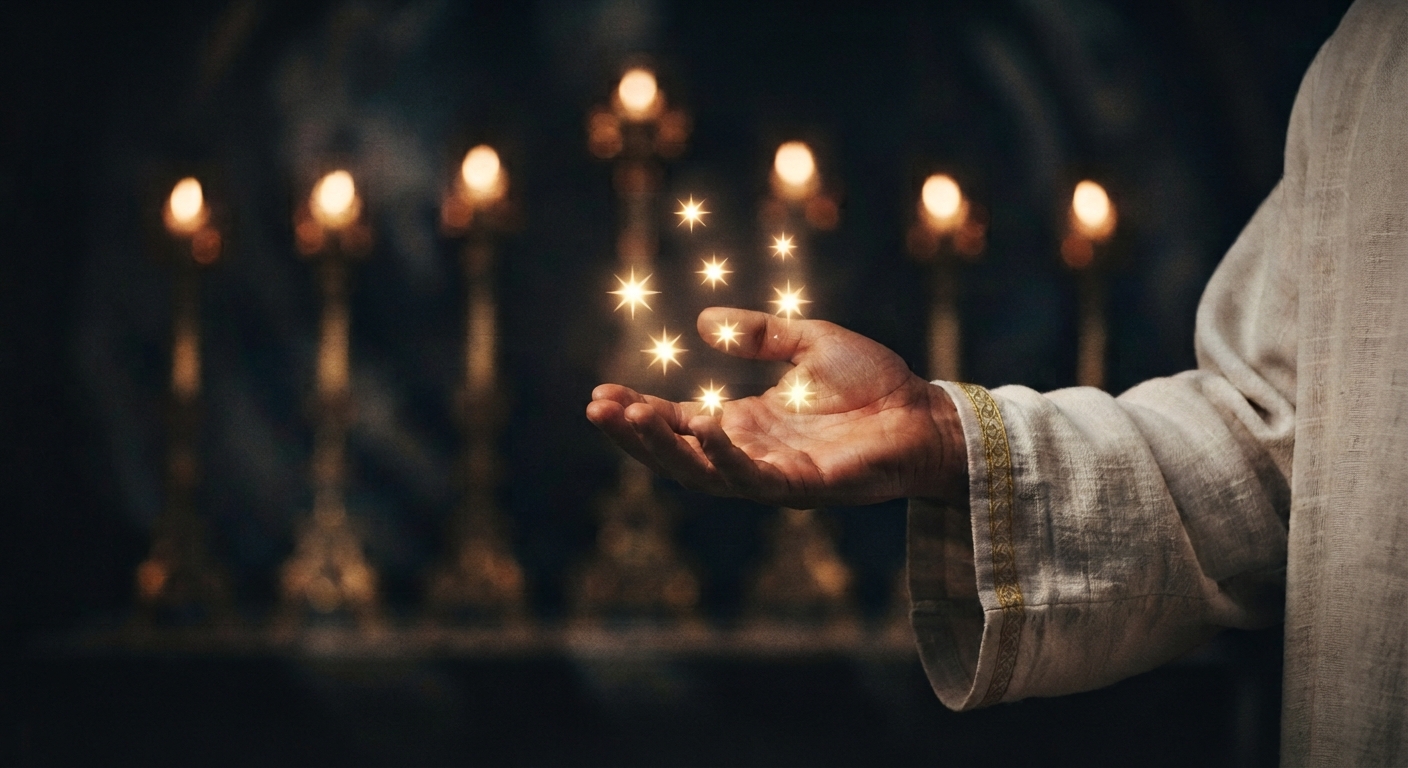
John is a prisoner on a rock in the Aegean when the Voice comes from behind him like a wall of sound. He turns, falls as though dead, and feels a hand come down on his shoulder, the right hand of a glorified Christ, walking among seven golden candlesticks. When John lifts his head, he sees what that hand is holding.
Seven stars.
"The mystery of the seven stars which thou sawest in My right hand," Christ tells him, "the seven stars are the angels of the seven churches" (Revelation 1:20). Not a metaphor. Not a puzzle for scholars to decode at their leisure. A blueprint, and the number itself is the first thing worth sitting with.
Why Seven Churches, Not One Ongoing Church
Revelation 2 and 3 are addressed to seven real, first-century congregations in Asia Minor: Ephesus, Smyrna, Pergamos, Thyatira, Sardis, Philadelphia, Laodicea. It would be easy to read those two chapters as mail delivered to seven towns and move on. But the spiritual condition of each church lines up, era by era, with the condition of the church at large across seven successive ages of history. Ephesus and its fading first love is a portrait of the apostolic period. Laodicea, rich, increased with goods, blind to its own poverty, is a portrait of the age we are living in right now. Seven letters, seven ages, one unfolding story.
Stars Held, Not Elected
To each of those ages, Christ sends a star. And the language matters: these men are not committee appointees or seminary graduates authorized by a synod. They are held, in the right hand of the Son of God, a position of both absolute authority and absolute protection. No devil can dislodge what He holds. No inquisition can burn it. No denomination can counterfeit it. Each star burns with exactly the light its hour requires, and when that hour is spent, the next star rises from the same hand that never let go of the first one.
Seven Names Across Twenty Centuries
So who are they? Working from Ephesus to Laodicea, the pattern traces through Paul the Apostle, who lays the original foundation on the mountain, the full gospel, water baptism in Jesus' Name, the Holy Spirit with signs following. Then Irenaeus of Lyons, defending that foundation against the Gnostic heresies of the second age. Then Martin of Tours, refusing a bishop's throne for a three-legged stool while the church begins courting the Roman state. Then Columba of Iona, copying psalters by candlelight on a windswept island while Rome buries the Word under ritual and decree, the midnight of the whole sequence. Then Martin Luther, striking the match of the Reformation: "Here I stand. I can do no other." Then John Wesley, recovering the doctrine of sanctification and opening the door to revival. And in the seventh and final age, William Marrion Branham, born in the hills of Kentucky, commissioned by angelic visitation, vindicated by the Pillar of Fire, sounding the message that restores what the first age established and calls the Bride out of denominational confusion back to the original Word.
A Symphony, Not a Coincidence
Laid end to end, this isn't seven unrelated biographies. It's a single narrative that begins in fullness, descends into centuries of darkness, and returns by God's own mercy to fullness again, the blade, then the tassel, then the full corn in the ear. Each age recovers a truth the previous ages had lost, buried, or diluted, until the Alpha becomes the Omega and, in the words of Revelation 10:7, "the mystery of God should be finished." Not partially recovered. Not tabled for a future council. Finished.
That's the claim behind the number seven, not a nice round figure John reached for, but the precise count of stars a sovereign Christ has held in His hand across two thousand years, each one chosen before the foundation of the world for the exact hour he was sent to.

This post draws directly on the full case made in Seven Stars In His Hand: The Messengers of the Church Ages.
Learn More Buy Now