What "Behold the Hand, Behold the Nail" Means in the Name YHWH
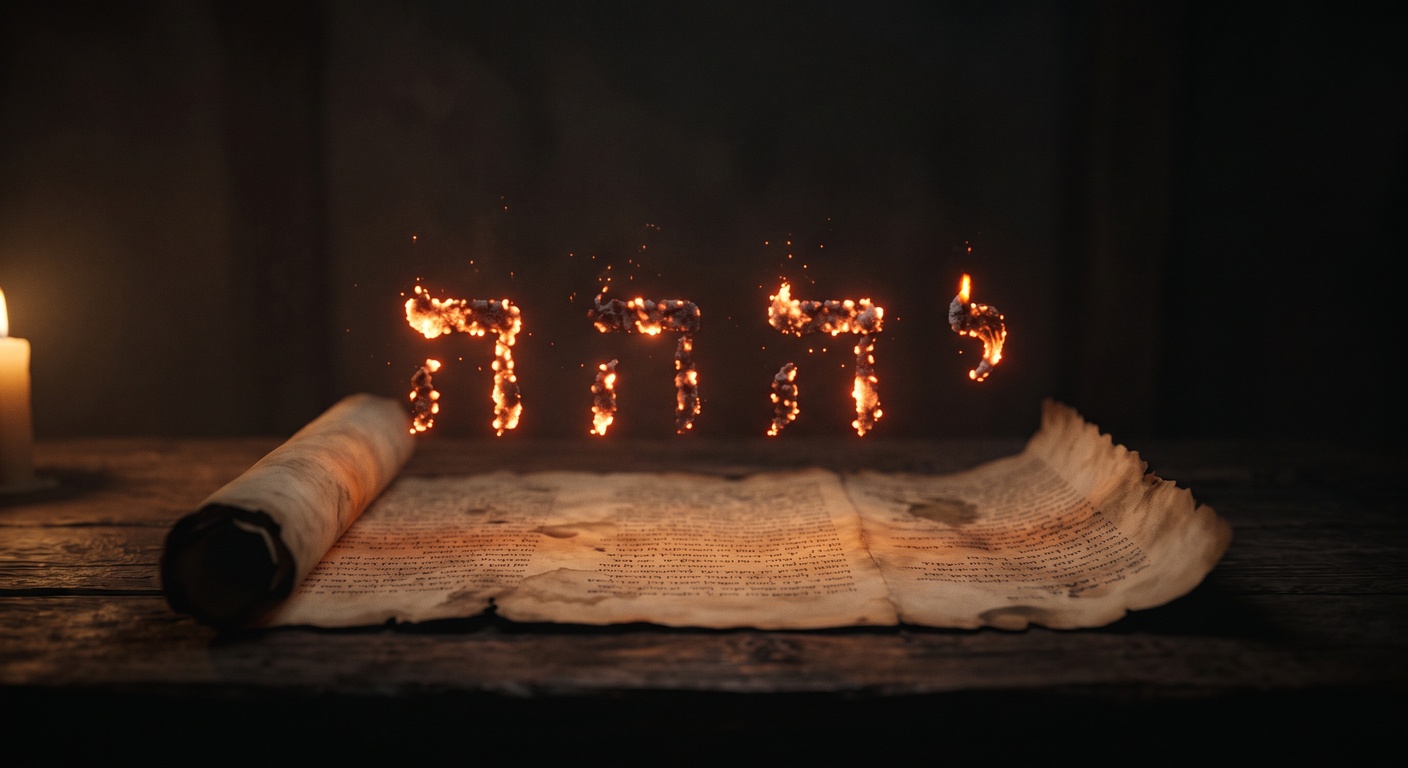
Every Hebrew letter you can read today started life as a picture. Long before the square script of a modern Hebrew Bible, and even before the elegant paleo-Hebrew of the Dead Sea Scrolls, the alphabet was a set of small drawings, an ox head, a house, a wave of water, a hand. Over centuries those pictures wore down into abstract letter shapes the way a stick figure worn smooth by erosion still hints at what it once was. The sounds stayed. The pictures, for most readers, got forgotten.
Which means there's a second way to read any Hebrew word, not just as a string of sounds, but as a string of pictures. And when you apply that second reading to the four letters of God's own covenant name, something remarkable turns up.
Four Letters, Four Pictures
The name YHWH is built from four letters: Yod, Hey, Vav, Hey. In their oldest pictographic forms:
Yod was drawn as a closed hand or arm, the picture behind words for work, deed, and power. Hey was a man standing with arms raised, and it carried the sense of "behold," "look," or "reveal." Vav was a tent peg or nail, driven into the ground to secure something in place. And the final Hey repeats the same picture as the second letter: behold, again.
What the Name Says When You Read the Pictures
Put the four pictures together in the order they're traditionally read aloud, and you get something very close to a sentence: Behold the hand. Behold the nail. Not "the God who exists," which is the more familiar Exodus 3 gloss on the name, something closer to a pointed finger. A hand, held up to be seen. A nail, held up to be seen.
For a Christian reader, the implication is hard to read past. Centuries before a Roman cross, before iron spikes and outstretched wrists, the name God gave Himself may already have been carrying that image, hidden in plain sight in the very sounds Israel used every time they spoke of Him.
Worth Reading Carefully, Not Uncritically
This reading has real popularity and real pedigree in devotional and apologetic circles, and it's the kind of pattern that, once seen, is hard to unsee. It's also worth saying plainly: the field of academic Hebrew linguistics is divided on how much semantic weight the original pictographs can bear once a language moves from pictograph to phonetic letter, trained Hebraists differ sharply on whether "letters as pictures" was ever meant to carry theological meaning the way this reading assumes, versus simply being how writing systems evolve everywhere. BEHOLD lays out the case in full, alongside the objections, and lets the reader weigh the evidence rather than asking for it to be taken on faith alone.

This post draws directly on the full case made in BEHOLD: The Hidden Prophecy in God's Name.
Learn More Buy Now